Google Ads buys you visibility today. SEO builds visibility you own for years. If you need leads this month, start with Ads. If you want your cost per lead to fall over time, invest in SEO. Most growing businesses end up doing both.
That answer is simple, but the right split for your business depends on your budget, how competitive your market is, and how quickly you need results. This guide compares the two channels in plain terms, shows when each one wins, and explains how to use them together without wasting money.
How each channel works
Google Ads: rented visibility
With Google Ads, you bid to show your ad when people search for specific keywords. You usually pay each time someone clicks. Where your ad appears depends on your bid and on how relevant and useful Google judges your ad and landing page to be.
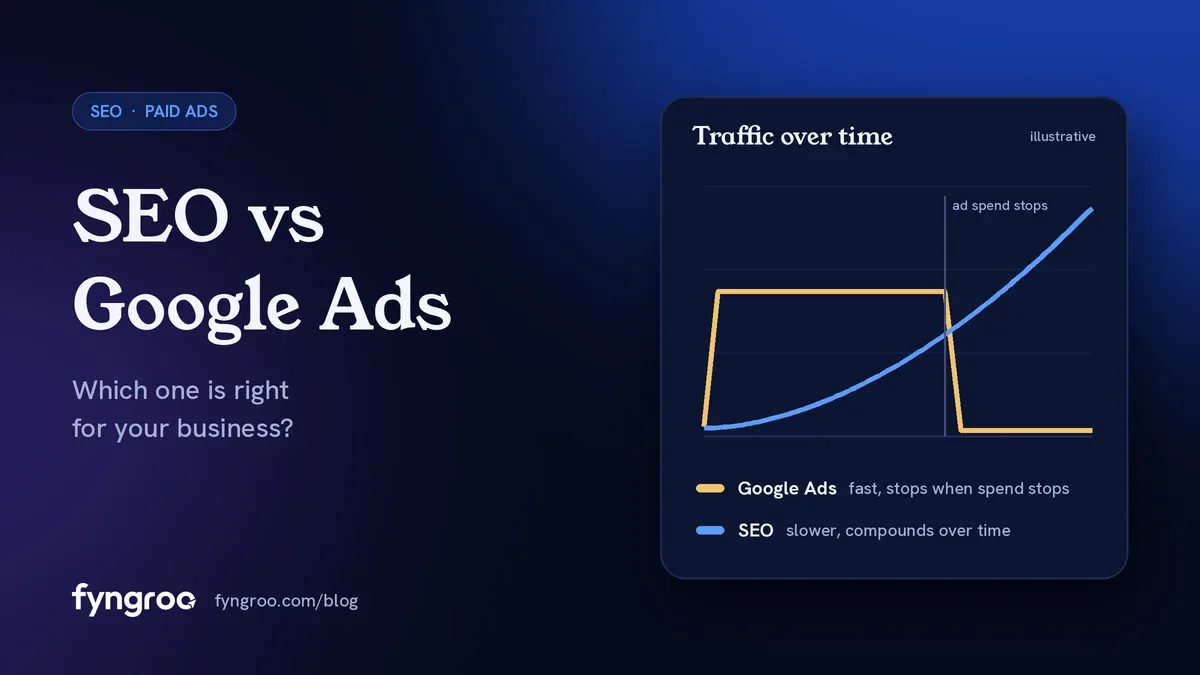
The big advantage is speed and control. A campaign can go live within days, and you can choose the exact keywords, locations, times and budget. The catch is that visibility is rented: when you stop paying, the traffic stops.
SEO: owned visibility
SEO (search engine optimisation) earns your pages a place in Google's unpaid results. You don't pay per click. Instead, you invest in a technically sound website, content that answers real questions, and links from other trusted sites.
The trade-off is time. SEO results build gradually, often over several months, and no one can promise a specific ranking. But a page that ranks keeps bringing visitors without a cost for each click, so the value compounds the longer you invest.
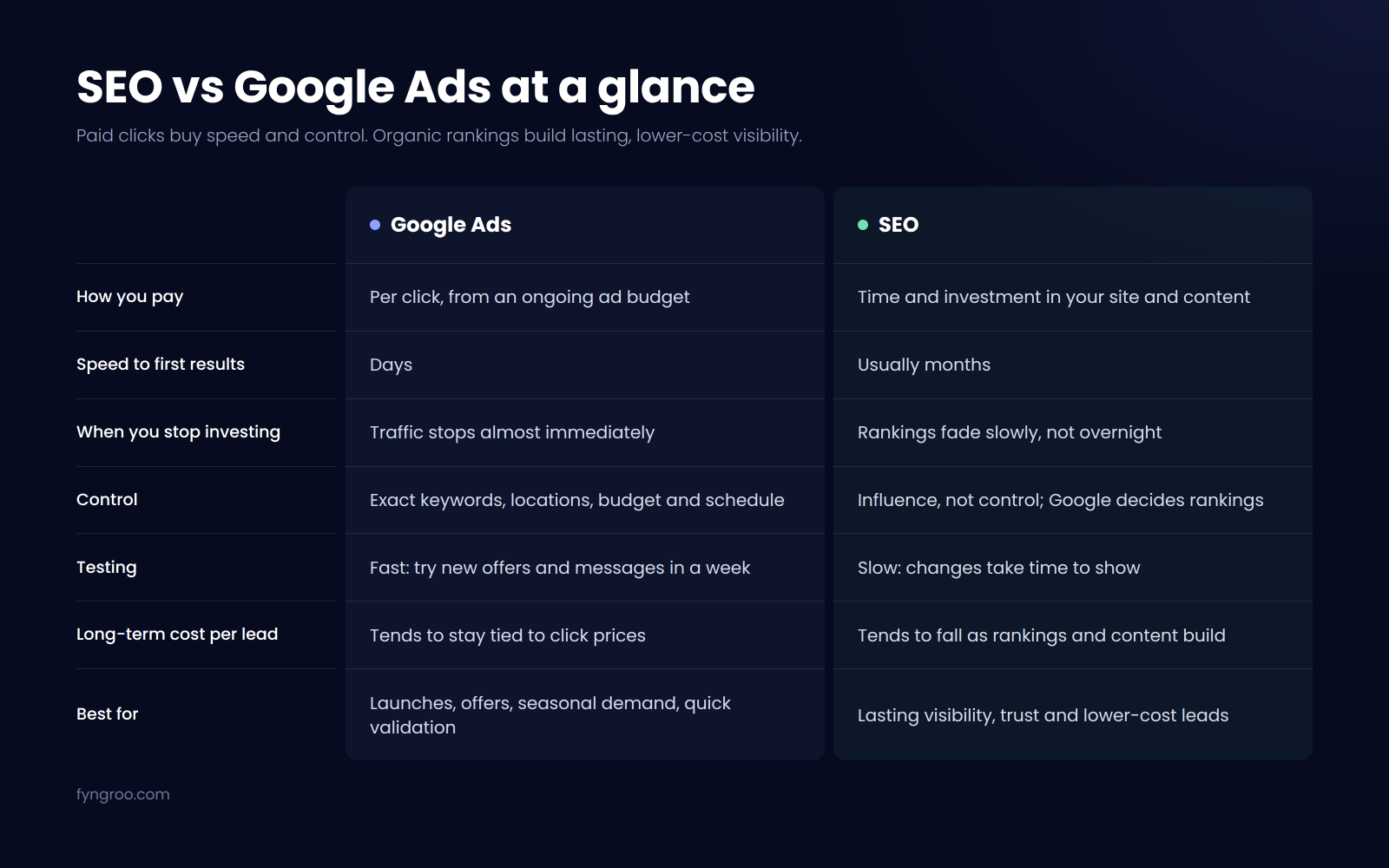
Neither column is "better." They solve different problems, which is why the real question is which one to lead with, and how to balance them.
When to choose SEO, and when to choose Google Ads
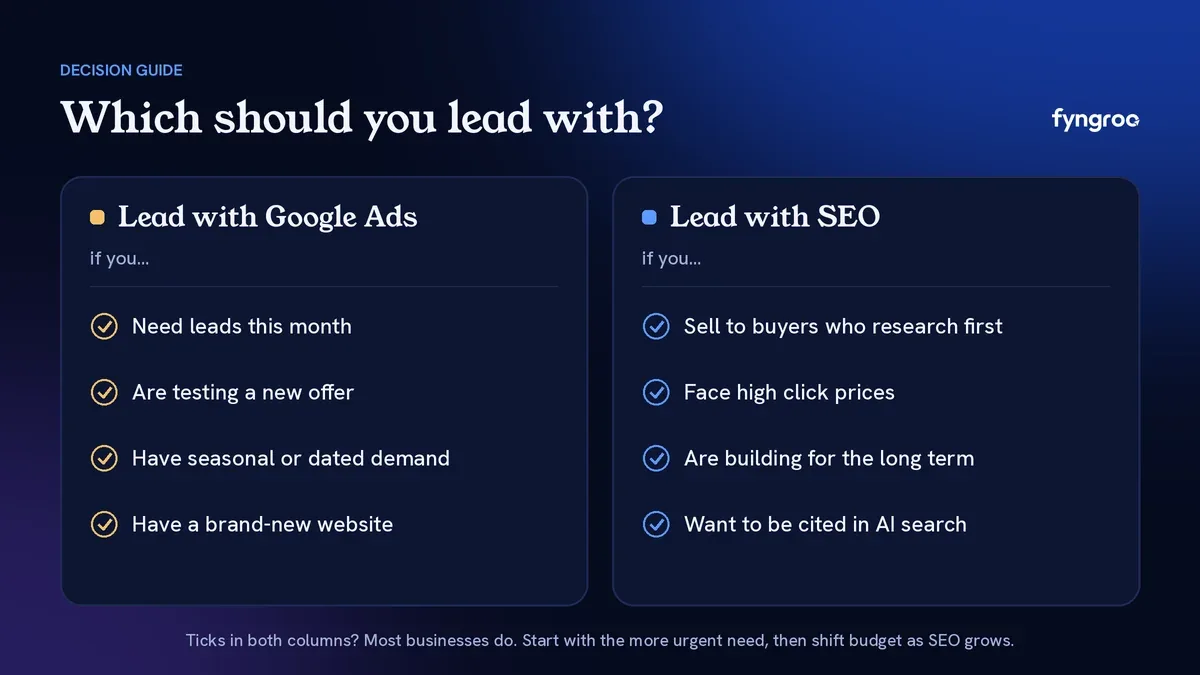
Lead with Google Ads if…
- You need leads now. A new business, a launch or a sales target this quarter can't wait months for rankings.
- You are testing an offer. Ads show within weeks which messages, services and locations actually convert. That is cheaper to learn before you build content around it.
- Demand is seasonal or time-bound. Festive sales, admissions season or a limited-time offer need visibility on specific dates.
- Your site is new. A brand-new domain usually takes time to earn trust in organic search. Ads fill the gap while SEO builds.
Lead with SEO if…
- Your customers research before buying. High-value services, B2B and considered purchases involve a lot of searching, comparing and reading. Being the helpful answer at each step builds trust ads can't buy.
- Click prices in your market are high. In competitive industries, paying for every click gets expensive fast. Ranking organically for the same searches reduces that dependence.
- You are building for the long term. If you plan to be in this market for years, every page that ranks becomes an asset that keeps working.
- You want to be found in AI search. Tools like Google's AI Overviews and ChatGPT draw on content from the web. Clear, well-structured pages give you a chance to be cited there, which ads alone don't. Our AI SEO service focuses on exactly this.
If several points on both lists apply to you, that is normal. It usually means the answer is a mix, weighted towards whichever need is most urgent.
Why most growing businesses use both
SEO and Google Ads work better together than either does alone, because each one fixes the other's weakness.
- Ads data makes SEO smarter. Your ad campaigns show which search terms actually turn into leads. That tells you which pages and content to prioritise for SEO, so you build around proven demand instead of guesses.
- SEO lowers what you spend on ads. As your pages rank for important terms, you can reduce bids on those keywords and move budget to terms you don't rank for yet.
- Being in both spots builds trust. When a searcher sees your ad and your organic result on the same page, your brand looks more established, and you take up more of the page than competitors do.
- Ads protect you while SEO grows. SEO results take months. Ads keep leads coming in during that time, so you aren't forced to choose between short-term revenue and long-term growth.
A common pattern is to start with a larger share of budget in Ads, then shift towards SEO as organic rankings grow. The exact split depends on your market, margins and goals, so review it every quarter rather than setting it once.
Whatever the mix, measure both channels the same way: leads and revenue, not just clicks or rankings. That makes it clear where the next rupee should go.
The right answer is the one that fits your goals
The SEO vs Google Ads question doesn't have one universal winner. Google Ads is the fastest way to get in front of buyers. SEO is the most reliable way to keep showing up without paying for every visit. The best plan uses each for what it does well and moves budget as results come in.
At Fyngroo , we run SEO and paid ads as one plan, with shared keyword data and one report tied to leads. That way, you can see which channel is earning its budget at any point.
Not sure where to start? Book a free strategy call. We'll look at your market and goals and tell you honestly whether to lead with SEO, Ads, or a mix of both.